By Jordan Vale
This post contains affiliate links. We may earn a commission from qualified purchases at no additional cost to you.
I used to rely on my phone’s timer for Pomodoro sessions until I noticed the pattern: every time I checked how much time was left, I lost 15 minutes to “the scroll.”
Three notifications. One Slack ping. A headline I didn’t need.
Deep work — gone.
The irony? I was using a productivity tool that required opening the single most distracting device in my life.
So I replaced it with something almost embarrassingly simple: a physical timer with a shrinking visual countdown.
No notifications.
No unlocking.
No context switching.
Just visible time disappearing in front of me.
This is now a core layer of my Deep Work Sanctuary Protocol — the behavioral system I use after locking in desk ergonomics and cable management. If your workspace is physically optimized, this is how you protect it cognitively.
THE EXECUTIVE PICK
Jack Pomodoro Timer Cube
$36
(For professionals who travel, present, and refuse digital distraction.)
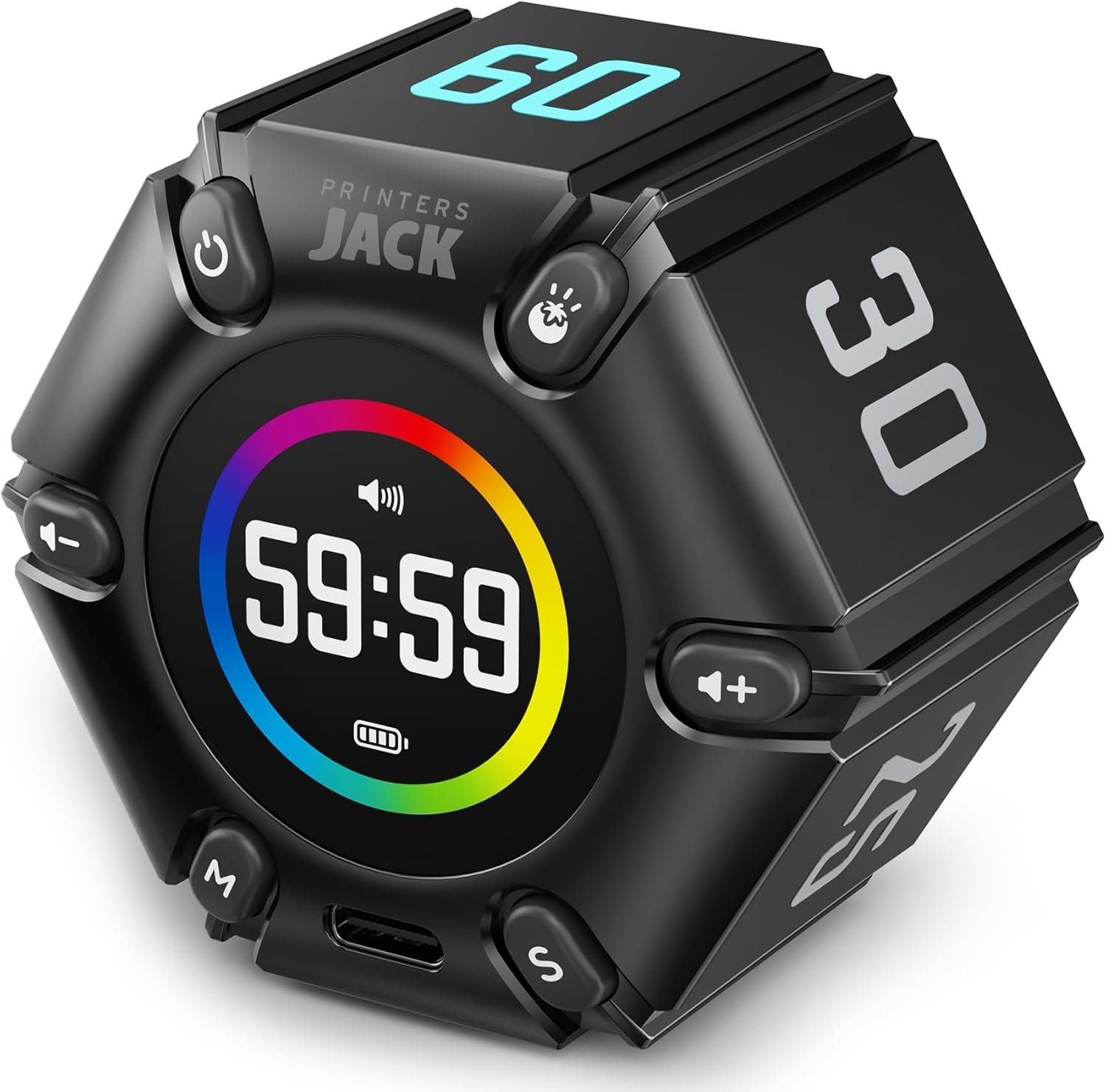
If you need visible time pressure without checking your phone — this is the one.
The Jack Pomodoro Timer Cube gives you immediate, glanceable accountability. You don’t tap. You don’t unlock. You don’t swipe away temptation. You simply look — and you know exactly how much time remains.
What makes it the executive choice:
- It eliminates “phone checking” entirely. You never open a device full of distractions just to see the clock.
- It travels well. Rechargeable via USB-C, pocket-sized, and durable enough to survive hotel desks and coworking tables.
- It’s presentation-friendly. The magnetic back lets you attach it to whiteboards during workshops.
- It won’t embarrass you on Zoom. Adjustable sound, vibration, or silent alerts.
The psychological shift is immediate. When the visual countdown shrinks, urgency increases. You stop drifting. You finish.
If your workday includes client calls, strategy sessions, airport lounges, and high-stakes deliverables — this is the behavioral anchor.
Also Worth Considering
Not everyone needs the same type of accountability device. These are the three other timers I’d recommend — depending on how you work.
For the Minimalist
TickTime / Secura-Style Rotating Cube Timer
$22
This is for the person who wants zero friction.
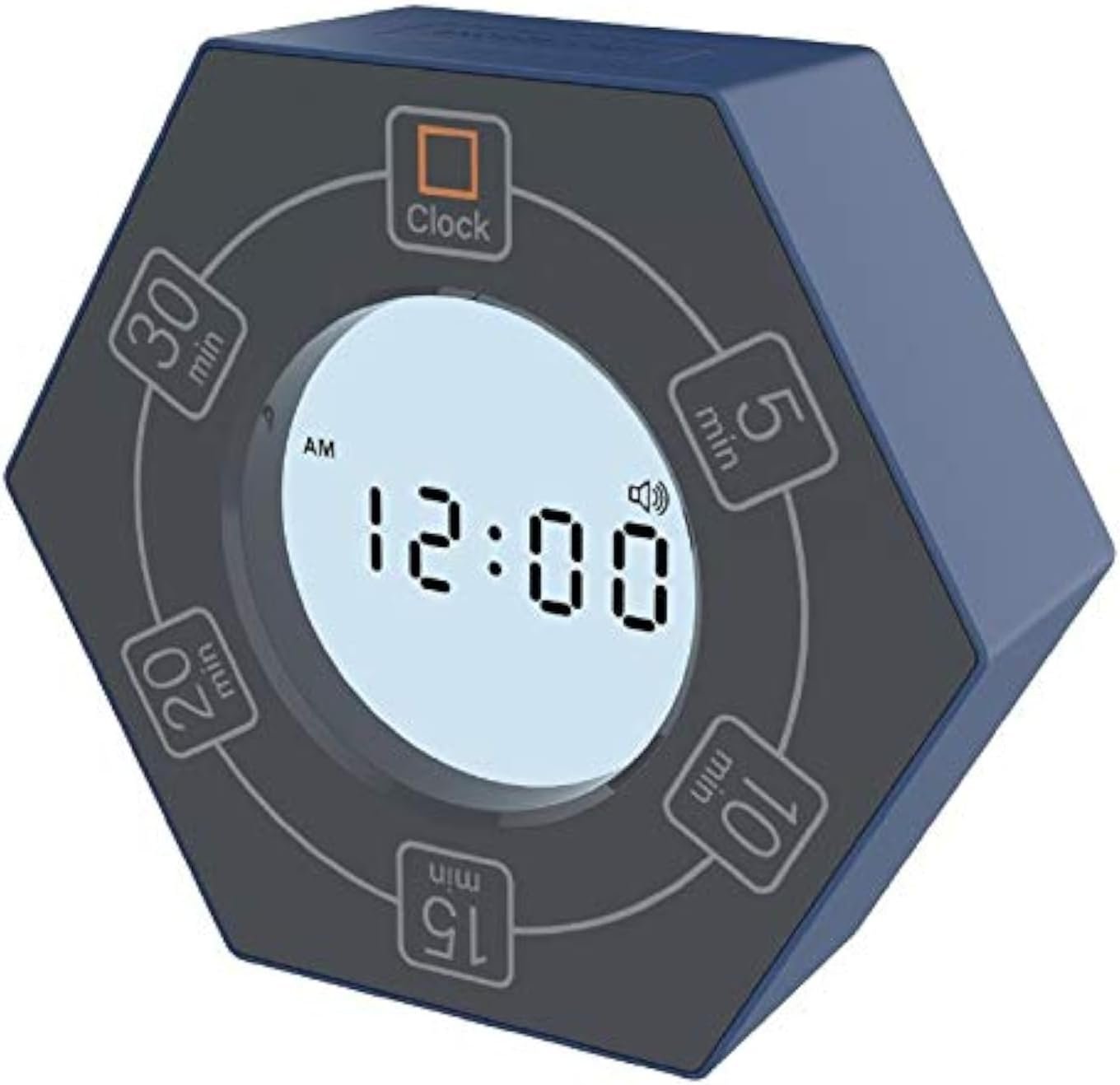
You flip it. It starts.
No menus. No brightness settings. No customization rabbit holes. Just preset intervals that begin the second the cube hits the desk.
It’s ideal if:
- You want something you can toss in your bag.
- You prefer preset blocks (25, 30, 60 minutes).
- You don’t want another device demanding setup time.
Think of this as the analog equivalent of a perfectly cleared desk: nothing extra, nothing to fiddle with — just work.
For the Aesthetic
DRETEC Hexagon Digital Timer
$38
If your desk is curated, this won’t ruin it.
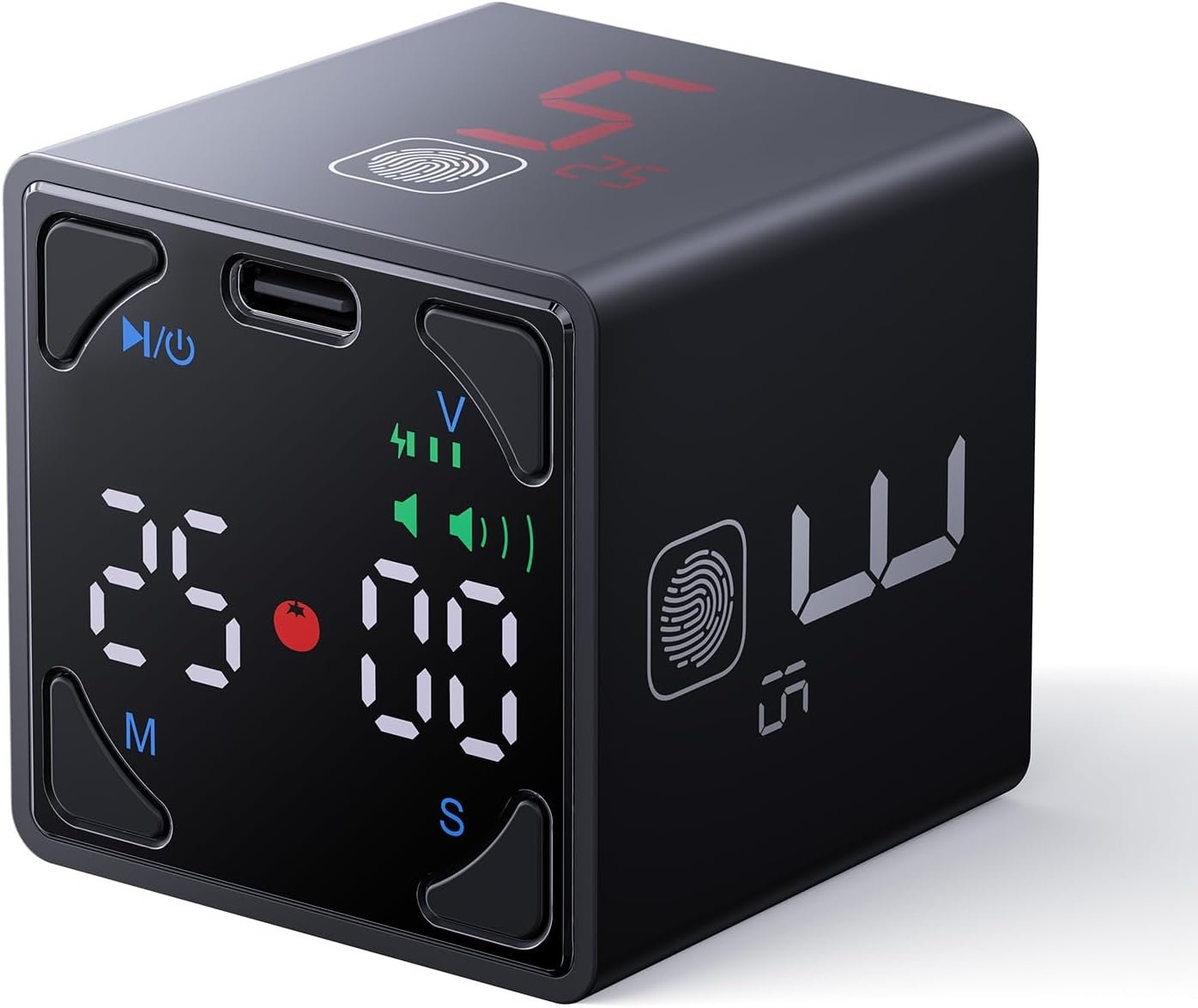
The DRETEC Hexagon feels more like high-end stationery than a productivity gadget. Clean white surface. Geometric shape. Subtle presence.
It’s for the professional who:
- Keeps a visually calm workspace.
- Wants preset intervals without visual clutter.
- Appreciates tools that look intentional.
This timer blends into a minimalist executive office the same way a good desk lamp does — quietly useful, never loud.
For the Professional (Group Visibility)
Time Timer PLUS (5-inch)
$14.40
If you run meetings, workshops, or family routines — this is the room-commanding option.
The large red visual disk makes time visible from across the space. There’s no ambiguity about how much remains. Everyone sees it.
Best for:
- Facilitators and consultants.
- Back-to-back client calls.
- Structured family schedules.
- ADHD-friendly environments where visible time matters.
One important note: Don’t use a visible red countdown during client conversations if they can see it. It creates subtle pressure. Mount it behind your screen if you’re leading sessions.
This one isn’t subtle. It’s authoritative.
The Vetter’s Notes (What Most Reviews Won’t Tell You)
The 60-minute cap is a feature — not a limitation.
Most deep work blocks degrade after 90 minutes anyway. Stack two sessions with a deliberate 10-minute reset instead. The reset is what protects quality. I pair this with my ambient lighting protocol — when the timer resets, I adjust to signal “new block.”
Use it for solo work, not delicate conversations.
A shrinking red disk during a negotiation subconsciously rushes people.
Honor the final five minutes.
When the timer is almost done, resist resetting. Force closure. This trains better task estimation and reduces overrun habits.
Pair it with environmental cues.
When the timer resets, adjust your lighting slightly or stand up briefly. The brain associates physical change with cognitive reset.
Travel hack: If you’re a frequent traveler, this fits perfectly in the TSA-PreCheck carry-on setup I use. Toss it in your personal item and you have focus-on-demand in hotel rooms or airport lounges.
Why This Works (Psychologically)
Phone timers require interaction.
Interaction invites distraction.
Distraction kills flow.
A tactile timer removes the gateway behavior: unlocking your phone.
Visible time creates urgency.
Urgency compresses attention.
Compressed attention produces output.
It’s simple — but so is most behavioral design when done correctly.
The Bottom Line
Phone timers are free.
But they cost you context switches.
For under $40, you can remove one of the most consistent friction points in your workday.
If you’re building out a full executive home office, this is the behavioral anchor. Visible time = accountable time = finished work. that protects everything else.
Visible time = accountable time = finished work.
Home Store Links is designed to provide curated, expert recommendations for busy professionals who have neither the time nor the patience for noise. Every product is independently selected by our editorial team here. We may earn a commission on links you click, but our opinions remain entirely our own. Prices and deals are accurate at the time of publishing but are subject to change at any time.
This post contains affiliate links. We may earn a commission from qualified purchases at no additional cost to you.